
The Kumano Kodo — A Self-Guided Pilgrimage from Koyasan to Nachi Falls
Sacred Forest Trails and Ancient Shrines on the Kii Peninsula
“Among deep mountains, the moon shines pure, and I see within that mirror all the world’s awakening.”
— Saigyo on the Kumano Kodo, Sankashu, 12th century
Among the oldest pilgrimage routes worldwide, the Kumano Kodo trail is a network of ancient trails threading through the dense cedar and cypress forests of the Kii Peninsula valleys, connecting the mountaintop temple town of Koyasan with the three grand shrines of Kumano, that has drawn emperors, monks and ambitious hikers since the Heian period in the 10th century. Walked for over a thousand years before any written record of it was even made, as a deeply spiritual journey, this best encapsulates why the Kumano Kodo is a path better experienced than described.
With options from three to 18 days, our standard seven-day version of the hike begins with Koyasan, the sacred mountain that has anchored Japanese Buddhism since the ninth century, and follows the route south west along the coast, then through forest to the east towards the three Kumano Grand Shrines, walking as the pilgrims do, toward the sea. The journey takes in a temple stay on the mountain, a coastal stretch along one of the older routes, and the Nakahechi’s finest sections from Takijiri to the waterfall at Nachi: a route that connects two of Japan’s most powerful sacred sites by foot, through some of its least-visited landscapes.
For those seeking a deeper walking experience in Japan, the Kumano Kodo offers a profound challenge along older, denser, less frequented trails, together with small inns and boutique ryokan along the route which carry a distinct warmth from generations of receiving pilgrims who travel gradually and with intent, and leave changed. Our itineraries are fully customisable to your pace and interests, and cover key sections of one of the most rewarding walks in Japan, with a guide or independently.
Translating loosely as “the ancient road to Kumano”, the name Kumano Kodo is grand in history its origins are disputed, though most scholars connect it to the Japanese word for bear, an animal long associated with the mountain gods of the peninsula. The route’s age however is undisputed: the earliest imperial pilgrimages to the Kumano Grand Shrines are recorded from the tenth century, and by the Heian period the journey had become so subscribed among the aristocracy that the road south was even described as a procession of carts moving through the forest.
The three shrines that anchor the route, Kumano Hongu Taisha, Kumano Hayatama Taisha, and Kumano Nachi Taisha, each occupy sites said to be of extraordinary natural power. Hongu is situated at the confluence of three rivers in a valley enclosed by forested mountains. Hayatama overlooks the sea at coastal town Shingu. Nachi is set against the highest waterfall in Japan, its white thread visible through the mist-veiled trees long before you arrive. Reaching all three on foot is a key milestone of the pilgrimage and a truly transformative experience with spectacular sights at each the first reward for a day of mountain hiking.
The communities along the route are the reason it continues to exist. The small family inns in the Hongu valley, the guesthouses at Takijiri and Chikatsuyu, the local guides who still walk the mountain sections with visiting pilgrims, they serve a deeper purpose here. Our itineraries are designed for visitors suited to connecting and interacting with these communities: unhurried, curious, and attentive to make the most of what for many is a life-changing experience.
A trail this old requires continued maintenance and care. We also support local preservation efforts, where community organisations work to maintain trails, and the wayside shrines that mark the route. Walking the Kumano Kodo with us, you are contributing to that effort, enabling these traditions to continue for future generations.
What makes Kumano Kodo Trail Hiking special
‣ Walk a living pilgrimage route: sacred trails visited since the Heian period, still tended by the communities who live alongside them
‣ After one day’s walking, relax at an onsen inn in the Hongu valley, among the finest hot spring settings in Japan
‣ Easily adjustable walking distances to suit all levels, with shorter and longer options on every day of the route
‣ A fully supported guided or self-guided pilgrimage walk in Japan: travel at your own pace with everything you need arranged
‣ Begin from Koyasan, one of Japan’s most extraordinary sacred sites, a monastery complex operating since the ninth century
‣ One final milestone at Nachi, where Japan’s tallest waterfall and one of its oldest grand shrines occupy the same forested hillside
The Kumano Kodo Trail at a glance
‣ Suggested duration: from three to eighteen days in total
‣ Trip level: All levels, from gentle pilgrimage walking through to more demanding mountain sections
‣ Hiking style: Ancient forest trails, some stone-paved, self-guided or guided
‣ Distance covered: up to 200km over seven days (4–22km per day)
‣ Lodging style: Traditional pilgrimage inns, family-run guesthouses, and one night in a Koyasan temple, or a mix with hotels to suit your preference
‣ $250 deposit (suggested budget from $970 per person)
Our Kumano Kodo Trail Model Itinerary
Itinerary
Day 1 — Exploring Mount Koya (2km to 21km of optional walking)
The adventure begins with the first of many mountains, Mt. Koya known in Japanese as Koyasan. This monastic complex founded by the Buddhist monk Kobo Daishi in 816 is reached from Osaka with a combination of train and cable car that itself offers a special kind of arrival. A night in a shukubo temple lodging, with vegetarian monk’s cuisine and the option of joining morning prayers at dawn, sets the atmosphere for the days to come.
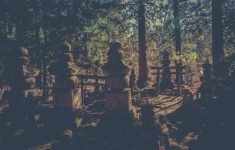
Koyasan sits at 900 metres, enclosed by eight peaks the monks here refer to as the petals of a lotus. As a monastery, the town itself contains over a hundred temples, the mausoleum of founder Kobo Daishi, and Okunoin, a forested cemetery of extraordinary atmosphere where the lantern-lit stone path between ancient cryptomeria trees may be the finest short walk in Japan.
The day’s walking is optional and unhurried: along the main street’s temple district, past the enomous Daimon entry gate, through Okunoin cemetary after the tour groups depart, or a full-fledged hiking route, at whatever pace suits you. Settle into the serenity before you begin walking south the next day. Dinner and breakfast are at your temple lodging; the experience of eating shojin ryori vegetarian cuisine prepared to monastic tradition is, for many guests, one of the most memorable meals of the entire journey, to rival any dish served in Tokyo or Kyoto.
Day 2 — Coastal Kumano Kodo (options of approx. 8km to 22km)
Descending from Koyasan by cable car and train, the route reaches the coast — a small town with historic brewing traditions, with backstreet kura warehouses reward a morning’s unhurried exploration. The afternoon walk follows an old Kumano Kodo coastal route south along the sea cliffs, with the Pacific visible through the pine trees and almost no other walkers. The shorter option takes around two and a half hours; the full coastal walk takes six to seven.

As one of the least-walked of the Kumano Kodo’s main routes, the path moves through fishing villages that see few international visitors, past small shrines tucked into the cliff face and coastal headlands where the view south toward the Kii Peninsula’s interior is uninterrupted. The quality of the light on this stretch in the afternoon, the particular silver of the Pacific at certain seasons, is the sort of thing hikers remember many years after the walk.
The town we arrive into itself rewards the time given to it: a soy brewery here has been operating on the same site since 1841, and the town’s preserved merchant streetscape is a quiet counterpoint to the more visited historic towns of central Japan. Lunch here before the afternoon walk is straightforward; we recommend the local sashimi. Overnight at a nearby inn. The day involves a small elevation change but the coastal sections are gentle.
Day 3 — Takijiri to Takahara and Chikatsuyu (8km to 23km, overnight in Chikatsuyu or Hongu area)
The Nakahechi proper begins at Takijiri-oji, the gateway shrine where pilgrims have traditionally paused to purify themselves before entering the sacred mountains. From here the route climbs steeply through dense cedar forest to the sleepy hamlet of Takahara, perched above the valley with views that reward the tough ascent, before descending to secluded town Chikatsuyu along the river. The shorter option takes around 2.5 hours; the full day’s walk takes six to eight.
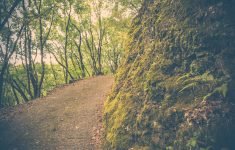
The climb out of Takijiri is both the Nakahechi’s most demanding opening and also its most clarifying. The cedar forest closes around you within minutes of the trailhead, the sounds of the valley road disappear, and the trail comes into focus. This section offers the first opportunity to experience the true character of a pilgrimage; a combination of physical effort and forest silence that culminates in a tremendous sense of achievement.
Takahara’s small cluster of stone-roofed buildings at around 350 metres makes an excellent rest stop and, in clear conditions, offers the first long views south toward the mountains that conceal Hongu. The descent to Chikatsuyu follows the Oto River, where the path narrows and the forest deepens. A number of ancient oji subsidiary shrines line this section, each one a pause point on the original pilgrimage, each still tended by a local family. Overnight in Chikatsuyu or nearby in a small pilgrimage inn, where dinner is typically a generous multi-course meal built around the valley’s mountain vegetables and river fish.
Day 4 — Chikatsuyu to Hongu (5km up to 25km, overnight in Hongu area)
The longest walking day of the tour follows one of the Nakahechi’s finest continuous sections from Chikatsuyu through mountain forest, past the ancient Tsugizakura-oji shrine complex, to the valley around Hongu and the great shrine at its heart. A shorter option follows the lower riverside path and takes around four hours; the full mountain route over Fushiogami-oji takes eight to nine, with views at the summit that remain with you, with other shorter options also possible.

The Fushiogami-oji pass is where, by tradition, pilgrims first caught sight of the rooftops of Kumano Hongu Taisha far below, fell to their knees, and wept. The modern route is dense enough with forest that the shrine remains hidden until the final descent, but the sense of arrival after the long climb is the same. The stone-paved sections on the approach to Hongu are among the finest on the entire Kumano Kodo, maintained by the local preservation community to a standard that makes it easy to forget you are walking in the twenty-first century.
Kumano Hongu Taisha itself is the spiritual heart of the Kumano Kodo, a grand shrine complex of dark hinoki cypress, elevated above the valley on a forested hillside, its approach lined with stone lanterns. Visiting in the late afternoon, at its quiestest, when the light comes at an angle through the trees, is the most impactful way to arrive. A short walk from the shrine, the great torii gate at Oyunohara, the original site of Hongu before a flood in 1889, stands in a clearing of extraordinary stillness. Overnight in the Hongu valley, where several inns have onsen from the Kawayu thermal river.
Day 5 — Hiking in the Hongu area (2km up to 20km, overnight in Hongu area)
Two mountain passes in a single day, carry the route through the deepest of forests, on sections of the Nakahechi that see a fraction of the walkers of the more celebrated stretches. Both passes involve real climbing and real descent; the reward is the particular quality of silence that comes from being deeper into the trails. Overnight back in the Hongu area. There are shorter options of around one and five hours and the full route takes seven to eight.

The first pass begins gently but becomes demanding quickly: a long climb through mixed forest on an ancient stone-paved path that has seen remarkably little change since it was first laid. The pass itself sits at around 420 metres, a brief clearing before the descent toward the valley between the two routes. The second pass is shorter but steeper; named after a Buddhist deity whose oji shrine sits at the summit, this route rewards the climb with a serene atmosphere of stillness.
The forest on both passes is old enough and dense enough that the path feels genuinely remote, even though help is never far away. For guests who are accustomed to mountain walking and want a day that tests them properly, this is the day the tour provides it. For those who prefer a gentler pace, a shorter valley option follows the river between the two pass trailheads, with stops at a small local café in the hamlet between the routes. Overnight in the Hongu valley for a further night.
Day 6 — Hike to Nachi (5km up to 22km)
The final walking day follows the Nakahechi east from Hongu toward the sea and the waterfall: a long forest traverse through the mountains above the Nakaura valley, descending to Nachi-san with the waterfall audible through the trees before it comes into view. A shorter option, beginning further along the route, takes around four hours, while the full walk takes six to seven. Both arrive at the same place: in front of Japan’s tallest waterfall, beside one of its oldest grand shrines, at the end of a pilgrimage.
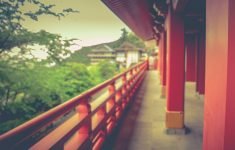
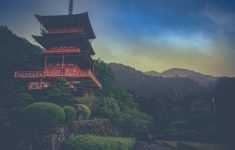
The approach to Nachi is from above, through forest, with the waterfall’s roar growing slowly louder as the path descends. Nachi-no-taki, at 133 metres, is Japan’s highest uninterrupted waterfall and has been considered an object of veneration since before recorded history. The shrine built beside it, Kumano Nachi Taisha, occupies a hillside of extraordinary natural drama: an orange pagoda, the waterfall, ancient camphor trees, and the view south to the Pacific compose a scene that feels irreducible, and the reason why the pilgrimage has existed for a thousand years.
The walk from the forest down into Nachi-san follows stone-paved paths through a section of the Nakahechi that is among its best maintained. The timing, arriving in the early afternoon, allows a proper visit to the shrine and its companion temple Seiganto-ji. Dinner and overnight at Nachi-san or in Katsuura on the coast below, where the seafood, this close to the Pacific, is exceptional, providing just enough reason to descend from the mountain.
Day 7 — Kumano Hayatama Taisha and onwards (2–8km of gentle walking)
The final day completes the pilgrimage circuit with a visit to Kumano Hayatama Taisha in Shingu — the third and coastal grand shrine, overlooking the mouth of the Kumano River where it meets the Pacific. A short boat journey up the Kumano River from Shingu to Hayatama is possible for those with time; the shrine itself rewards an unhurried morning before onward connections south toward Osaka, Kyoto or Tokyo. The day’s walking is as long or short as you feel up to.
Kumano Hayatama Taisha in Shingu is the most coastal of the three grand shrines, a complex of dark wood and white gravel close enough to the sea that the sound of the river and the Pacific are both present. The shrine’s sacred nagi tree, believed to be over a thousand years old, stands in the compound and is the source of the pilgrimage amulets sold throughout the Kumano Kodo. A leaf from this tree, carried by pilgrims, was said to ensure a safe return.
The journey up the Kumano River by small boat, depending on time and season, is one of the most beautiful ways to arrive. The river is wide, green and slow-moving, bordered by forested hills, and the boat journey takes around ninety minutes in silence broken only by the water and the occasional kingfisher. Shingu town beyond the shrine has enough to occupy a gentle morning: a covered market street, a lacquerware shop or two, the remains of Shingu Castle on the hill behind. The train from Shingu connects to Osaka, and onwards to Kyoto and Tokyo.
Things to keep in mind on the Kumano Kodo Trail
Spring (late March to May) and autumn (October to early December) are the most comfortable seasons on the Kumano Kodo. The forest is at its most vivid, and temperatures are ideal for sustained walking. Summer is warm and very humid, manageable on the mountain sections but demanding on the lower valley paths. The rainy season from mid-June, and brings a particular atmospheric quality to the forest that and mountains, though the stone-paved sections require careful footing. The route is walkable year-round; winter on the passes is generally milder than other parts of Japan, but can bring light snow, so check with us before booking late December through February.
The walking is moderate to demanding overall, with the full Day 5 (Akagigoe and Dainichigoe) the most physically testing, with all days providing a gentle alternative, with more time which can be spent in the quiet villages. Some of the Nakahechi sections involve some uphill — the exit from Takijiri on Day 3 and the long approach to Hongu on Day 4 are both sustained ascents, although the shorter options for the most part do not require a decision in advance. If you walk regularly at home and are comfortable with a full day of uneven terrain and some steep gradient, this hiking is well within reach. If you are uncertain, share your usual level and we will be honest about where it fits and what routes best suit your comfort level.
The tour begins on Koyasan, reached from Osaka by the Nankai Railway and Koya Cable Car, approximately 2.5 hours from central Osaka. The tour ends in Shingu or Katsuura, both connected to Osaka by the Kisei Line at approximately fours hours and Osaka connects to Tokyo by Shinkansen in around two hours forty minutes. We provide full transport instructions, recommended train times, and optional ticket booking with every itinerary.
For less confident hikers, our Nakasendo trail tour has gentler options, but is equally rewarding. Both can begin and end from Kansai (Osaka, Kyoto or Nara), so they can be done together with a city stay in the middle as well.
The Kumano Kodo has two luggage forwarding options; using a reliable, inexpensive national courier to every second inn (you manage with a lighter day-pack in between), or true daily luggage transfer for an additional fee.
Frequently Asked Questions about the Kumano Kodo Trail
Absolutely. Our standard seven-day model works well, especially first-time visitors to the region looking for an accessible, varied and immersive experience on the trail. It is also easy to extend the trip with sections of the other Kumano Kodo routes for a fuller pilgrimage experience up to eighteen days, with our minimum recommendation of shortening the walk down to three days, which requires proportionally more travel time to reach the trails. Please inquire and we can build around what works for you.
Many guests do, and the Kumano Kodo is one of the most rewarding self-guided walks in Japan for an independent traveller. The trail is well-marked on the Nakahechi, the inns are experienced with international guests, and the Hongu valley communities are friendly and welcoming. We provide detailed route notes, all accommodation pre-briefed on your arrival, and an emergency contact at all times.
A various number of options across the seven days: one night in a Koyasan shukubo temple lodging with vegetarian shojin ryori meals, pilgrimage inns along the Nakahechi, such as in Chikatsuyu and Katsuura that have been receiving walkers for generations, and riverside onsen inns in the Hongu valley — where an outdoor bath in a thermally heated river is the standard end to a walking day. Some inns are simple and beautiful, others more comfortable. We select for character and warmth in each case, and will tell you honestly what each night involves.
Seven days is our recommendation for experiencing both Koyasan and the Nakahechi’s full trail from Takijiri to Nachi. Three days is possible for those focused purely on the Nakahechi’s most iconic sections and don’t mind long days including travel. For those with more time, further routes along the coastal and mountainous areas offer further depth on even lesser-walked Kumano Kodo routes. We are happy to discuss what fits your available time and preferences.
For the peak walking seasons of spring and autumn we recommend at least six months ahead. The smaller pilgrimage inns in Chikatsuyu and Hongu have limited rooms and fill quickly, particularly during the October and November foliage period and the late April cherry blossom season along the lower valley sections. Outside peak season, three months is usually sufficient. For last-minute enquiries, please contact us and we will always discuss openly what is still possible.
The Kumano Kodo is more remote than itineraries based in the major cities, and the logistics are more involved, which is where our preparation and support makes the largest difference. Guests who arrive having read their route notes and trusted us to handle the arrangement find the trail straightforward and deeply rewarding. Those who come expecting urban Japan’s convenience infrastructure will need to adjust their expectations, which we help them do before they leave.
Yes, and many guests do. The Nakahechi is well-signed in English, the inns we use are experienced with international pilgrims, and we provide route notes in English with clear landmarks, distances and waypoints. Rural Japan’s language gap is real, particularly in the smaller Hongu valley communities, but in our experience this is more often a source of warmth than difficulty for those going in with the appropriate mindframe. The small moments of connection across a language barrier on routes like this tend to be the ones visitors remember longest. We make sure the logistics require as little Japanese as possible, while giving you every encouragement and support to try a few words if you feel comfortable to.
Yes. The itinerary passes through all three: Kumano Hongu Taisha on Day 4, Kumano Nachi Taisha on Day 6, and Kumano Hayatama Taisha in Shingu as an option on Day 7.
For the right traveller: for the curious, unhurried pilgrim and the trail runner alike, the Kumano Kodo is among the most profound hiking holidays, and one of the most rewarding self-guided walking tours in Japan for those who want a journey with real weight. It asks something of you: a willingness to be present in the forest, to accept the challenge the path sets, to arrive at a shrine in boots with a deliberate intention.
Inclusions
What we provide on the Kumano Kodo Trail
‣ One night at a Koyasan temple lodging, six at a mix of traditional pilgrimage inns and onsen guesthouses
‣ All breakfasts and evening meals at inns are typically included
‣ Reserved transport where walking alternatives are not practical and pre-booking is required
‣ Personalised schedule book with recommended timings and daily options
‣ Detailed route notes and map book for navigation including a preparation guide covering the Kumano Kodo’s history, culture and practical details
‣ Pre-trip support from the team in Japan and local emergency contact throughout your walk
‣ 3 days from $970
‣ 7 days from $2,190
‣ 18 days from $4,800
(per person with twin share)
Hibi Travel was born from a love of local Japan.
We are a small, family-run team, with the aim of connecting visitors with remote communities on immersive, engaging adventures throughout Japan.
